
It was another early day, but since we moved from Esna to Aswan yesterday afternoon, we were not awakened by morning prayers at 5:40 am. Instead, we got to sleep in until 6:00 am because today was going to be a big day.

Breakfast, bus, and off we went. This is a much smaller group today because Abu Simbel is an optional tour. We drove for about 45 minutes before having a lovely tour of the new Aswan High Dam built by Nasser in the 1960s. It controls the flooding in Egypt-which was a great thing for ancient civilizations, but is inconvenient in modern times. As with any human construction, it has its problems, one of which is it doesn’t allow silt to pass through, and silt is needed to nourish Egypt’s rich soil. The other is that the crocodiles are now blocked out from the north. Maybe not a bad thing…
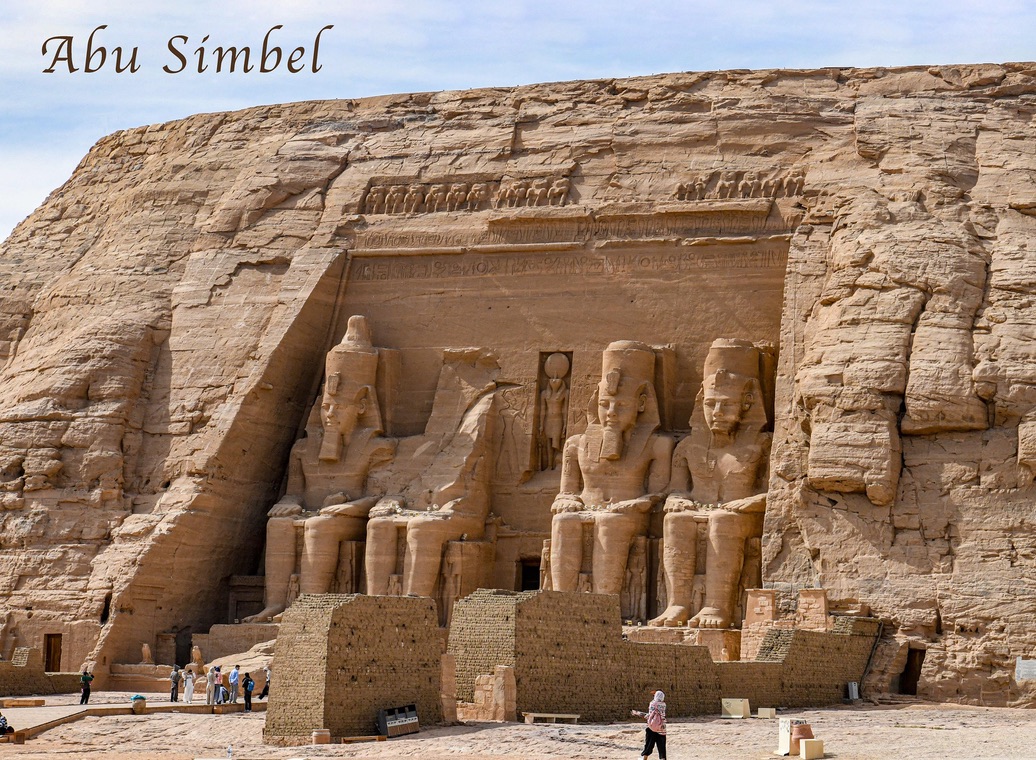
Next, we drove to the small airport and boarded a 40-passenger prop plane, flew 50 minutes over the Sahara to Abu Simbel, the 8th wonder of the world. This is a truly amazing site. (Not to make light of it, but the 2022 version of Death on the Nile was set here, though filmed completely in England. It’s an amazing look at Abu Simbel up close.) These two structures are not tombs, but temples—one to Rameses II and one to Nefertari, his favorite wife. Each of the outer statues is 60 ft high, and the interior is equally impressive with wall art and writing, depicting and describing entering the afterlife.


The really amazing thing is that when the dam was under construction, it was clear that these structures were going to be submerged under the rising water so, a German engineering firm devised a way to disassemble the whole mountainside, move it up something like 100 feet and reconstruct the whole thing! Look closely below. You’ll see that the mountain is actually blocks of stone. Moving Abu Simbel is as big a feat as building the dam!
Another bit of magical engineering is that the original construction allowed the sun to light up the interior face of Ramses II twice a year, in spring and autumn (once for his birthday and the other for his ascension to the throne.) When the whole temple was relocated, the engineers managed to create the same exact effect with one change. Instead of the sun shining in on February 21st and October 21st, it now shines in one day later. The whole thing is spectacular.
We got back to the boat for a very late lunch and that was it for the day.